
Charging 101
AC Level 1
Level 1 equipment provides charging through a common residential 120V AC plug. These chargers do not require any additional electrical work or charging equipment. This is the slowest option, adding around 5 miles of charge per hour, but its convenience and low cost makes it a good choice for at-home charging.
AC Level 2
Level 2 charging equipment requires a 240 V outlet and adds 10 to 20 miles of range per hour of charging time. This kind of charger requires the installation of charging equipment by a professional installer or electrician. Level 2 charging is found at homes, workplaces, and public charging stations.
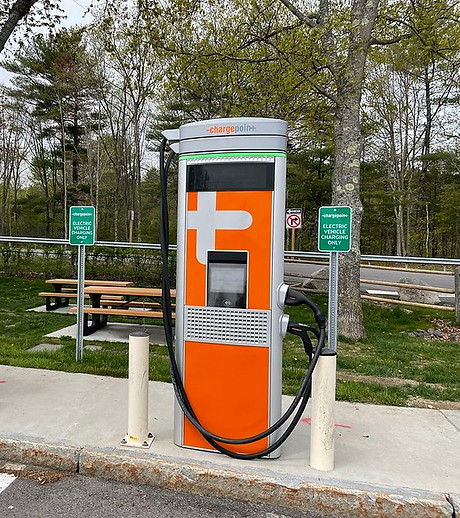
DC Fast Charger
DC Fast Chargers provide charging through a 480 V AC input that requires specialized, high-powered charging equipment. These are the fastest chargers and provide 180-240 miles of range in an hour. This kind of charging is generally found in high-traffic public charging stations.
*PHEVs cannot be charged by DC Fast Chargers.

A Note on Equipment
The majority of vehicle manufacturers have started using the North American Charging Standard (NACS), also known as J3400 connectors. This standard will reduce barriers for public charging and the need for adapters.
Understanding Charging
Kilowatts (kW) measure how quickly energy is transferred from the charger to an electric vehicle’s battery. In contrast, kilowatt-hours (kWh) indicate the battery’s total energy capacity, similar to the size of a fuel tank in a gasoline car.
The amount of energy added during charging is calculated by multiplying the charger’s power in kW by the charging time in hours. For example, a 50 kW charger operating for one hour delivers 50 kWh of energy. However, every vehicle has a maximum charging rate it can handle, so even if a charger can supply 150 kW, the car might only accept 100 kW, limiting the charging speed. Typical EV battery sizes range from about 50 kWh to 200 kWh, depending on the vehicle’s size.


Measuring Fuel Efficiency
The three common fuel efficiency measurements are:
Miles per kilowatt-hour (miles/kWh): Measures how far an EV can travel on one kWh of electricity. An EV with a 50 mile/kWh can travel 50 miles on each kWh of battery capacity. The higher the better.
Kilowatt-hours per 100 miles (kWh/100 miles): How many kWh the vehicle uses to travel 100 miles. A 25kwh/100 miles means the car will use 25 kWh of electricity to travel 100 miles. The lower the better.
Miles per gallon equivalent (MPGe): Equates the electricity used by an EV to the amount of energy in gasoline. It is based on the conversion of 33.7kwH being equal to one gallon of gasoline.
Battery Degredation
Be aware that electric vehicle (EV) batteries do lose some capacity over time, but the decline is generally minimal. On average, battery degradation is about 1.8% per year, meaning most EVs can retain the majority of their driving range for well over a decade. This isn’t unique to EVs as traditional gasoline vehicles also lose efficiency and range as they age.
The rate of degradation for EVs varies depending on how manufacturers design and engineer the batteries. To provide peace of mind, most manufacturers back their EV batteries with warranties that guarantee a certain level of capacity retention over several years.
